


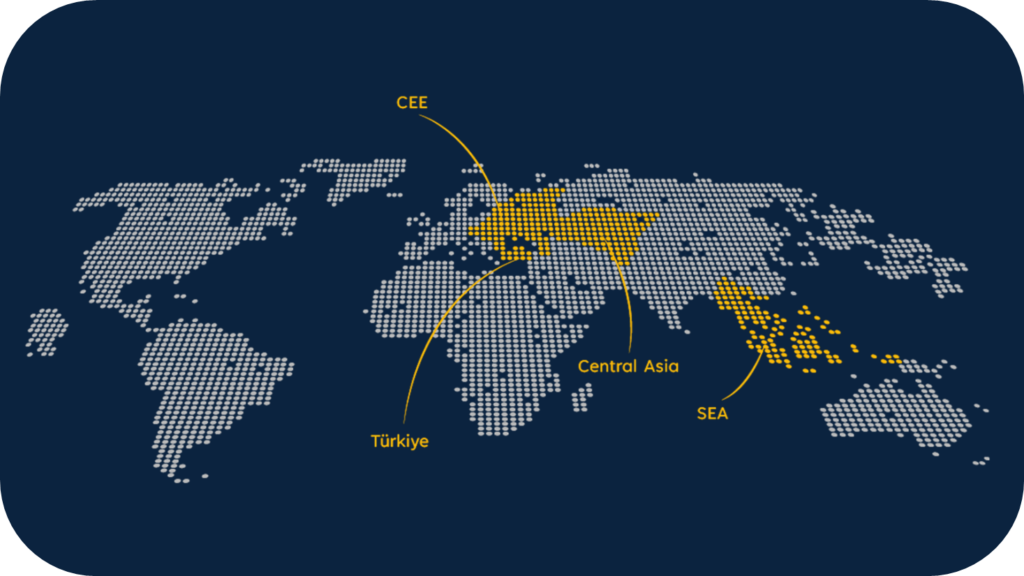
Most industries scale outward from strong domestic markets, but gaming does the opposite: it scales from talent outward into global demand.
That distinction explains why emerging markets consistently overperform in interactive entertainment relative to their GDP size.
Small Domestic Markets Force Global Standards
In countries like Poland, Türkiye, Estonia, or Vietnam, local markets are rarely large enough to sustain venture-scale outcomes outside a handful of sectors, meaning a startup cannot rely on domestic revenue to grow comfortably. That constraint forces a different behavior pattern: products are built in English from inception, user acquisition strategies are designed for U.S. auctions rather than local app stores, and monetization models are calibrated against global benchmarks.
Poland’s CD Projekt did not scale because Poland was a large gaming market; it scaled because it built globally competitive IP from day one. Similarly, Türkiye’s mobile gaming ecosystem did not emerge from domestic purchasing power, but rather from teams competing internationally in free-to-play auctions, just as Vietnamese studios generate billions of global downloads without relying on Vietnamese ARPU. In gaming, revenue geography and talent geography are decoupled, and that structural decoupling is rare in other industries.
Capital Scarcity Creates Operational Discipline
Emerging markets historically lack capital density. This is often framed as a disadvantage. In gaming, it is frequently an advantage.
When funding is limited:
- Teams ship faster.
- They test earlier.
- They kill weaker concepts quickly.
- They obsess over retention and monetization metrics.
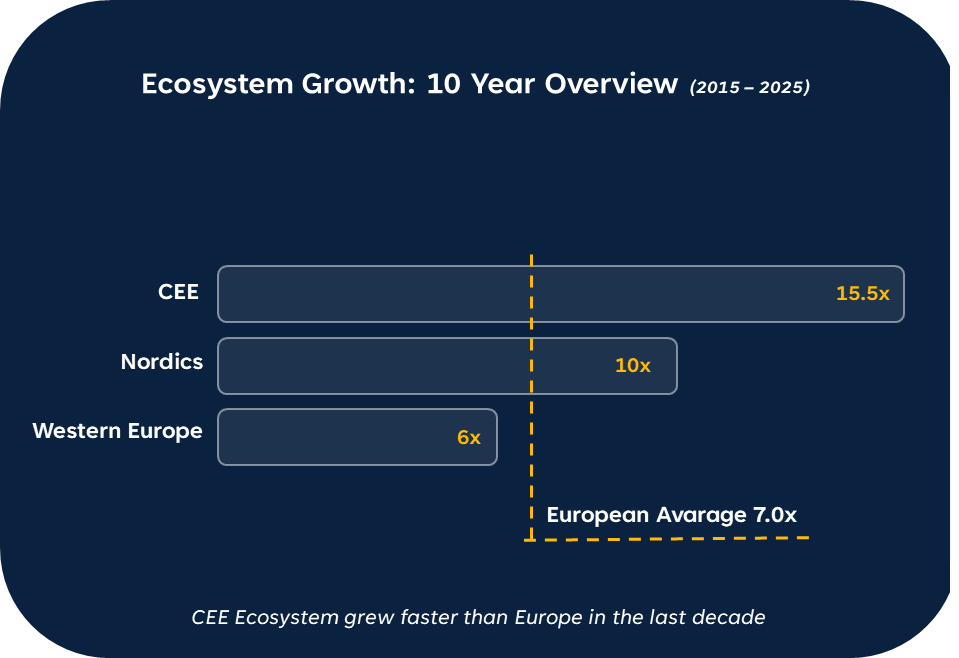
In capital-saturated ecosystems, product rigor is sometimes delayed by runway comfort, whereas in capital-constrained ecosystems, rigor is survival. Gaming is unforgiving: poor retention kills studios quickly, and inefficient user acquisition destroys margins.
Consequently, founders trained in constrained environments internalize capital efficiency as instinct, and that compounds.
Leapfrogging Favors Interactive Content
Emerging markets often bypass technological stages.
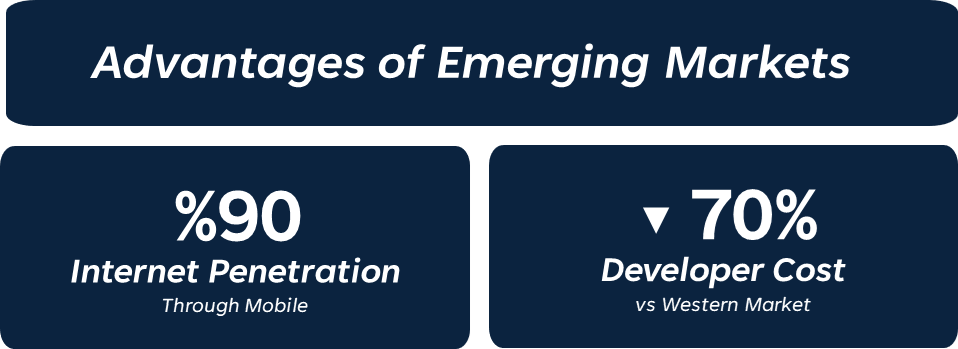
India skipped desktop internet and went mobile-first. Southeast Asia adopted digital wallets before traditional banking penetration matured. Large segments of Africa and Asia experienced their first meaningful computing device through smartphones.
When populations enter the digital economy through mobile, interactive formats dominate.
Mobile gaming requires:
- No physical infrastructure.
- No retail distribution.
- No broadband fiber dependence.
It thrives on app stores and mobile networks.
This is why Vietnam, Indonesia, and India became major mobile gaming forces without inheriting console traditions. Leapfrogging is not simply about adoption speed; it shapes behavioral defaults. Mobile-native generations expect interactivity, personalization, and embedded commerce, and gaming aligns naturally with those expectations.
Talent Density Outpaces Capital Density
Emerging Europe and Southeast Asia both share a similar pattern of high technical talent supply and lower venture capital intensity per capita, creating an imbalance that leads to temporary mispricing.
Strong engineering ecosystems, from Poland to Ukraine to Türkiye to Vietnam, produce globally competitive products at valuation benchmarks below Western equivalents.
Gaming amplifies this dynamic because:
- Production teams can remain lean.
- Distribution is global.
- Revenue is export-based.
Furthermore, when AI-driven production tools compress asset creation costs further, smaller technically strong teams gain even more leverage. AI does not eliminate geographic differences; it amplifies ecosystems already optimized for efficiency.
Gaming Is Infrastructure-Light but Cognitively Heavy
Many industries require heavy infrastructure investment, such as manufacturing, logistics, retail, and hardware. Gaming, however, requires cognitive infrastructure: design, systems thinking, data literacy, and monetization psychology. Emerging markets with strong technical education systems can compete in these dimensions without needing deep domestic purchasing power, and that asymmetry is powerful.
A ten-person team in Warsaw, Istanbul, or Ho Chi Minh City can compete globally in ways a manufacturing startup cannot. Gaming rewards intellectual capital more than physical capital, and emerging markets often have more of the former than the latter.
The Structural Alignment
Gaming and interactive entertainment thrive in emerging markets because they align with five structural realities:
- Small domestic markets force global ambition.
- Capital scarcity enforces operational rigor.
- Mobile leapfrogging accelerates adoption.
- Technical talent is abundant relative to capital.
- Distribution is borderless.
This is not cyclical growth; it is structural compatibility between industry mechanics and economic context. The next phase will not be defined by whether emerging markets can produce global gaming leaders, because they already do.
The more interesting question is how long capital markets continue to treat these ecosystems as peripheral, while their structural alignment with interactive media continues to compound.